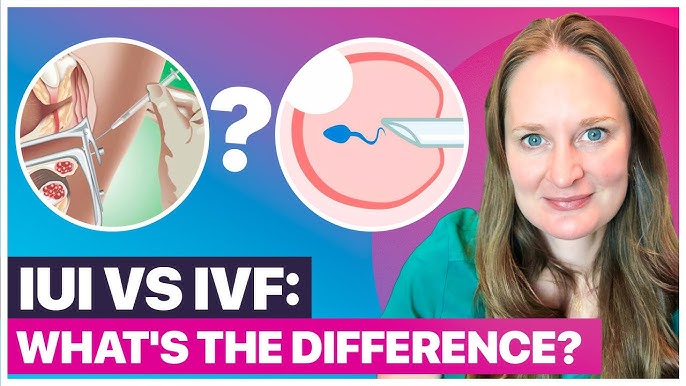
When facing fertility challenges in Nigeria, two of the most common assisted reproductive treatments recommended by doctors are IVF (In Vitro Fertilization) and IUI (Intrauterine Insemination). Many couples struggle to choose between the two due to cost concerns, success rates, and medical suitability.
This guide breaks down IVF vs IUI in Nigeria, comparing costs, success rates, procedures, and who each option is best for, based on insights from Nigerian fertility specialists.
What Is IUI?
Intrauterine Insemination (IUI) is a fertility treatment where specially prepared sperm is placed directly into the woman’s uterus during ovulation to increase the chances of fertilization.
How IUI Works:
Ovulation monitoring
Sperm washing and preparation
Sperm insertion into the uterus
Minimal medication or mild ovarian stimulation
IUI is often the first-line treatment for couples with mild fertility issues.
What Is IVF?
In Vitro Fertilization (IVF) involves fertilizing an egg with sperm in a laboratory and transferring the resulting embryo into the uterus.
How IVF Works:
Ovarian stimulation with fertility drugs
Egg retrieval
Fertilization in the lab
Embryo culture
Embryo transfer into the uterus
IVF is considered the most advanced and effective fertility treatment available in Nigeria.
IVF vs IUI in Nigeria: Key Differences at a Glance
Feature IUI IVF
Procedure Complexity Simple Advanced
Level of Medical Intervention Low High
Cost in Nigeria Lower Higher
Success Rate Lower Higher
Time to Pregnancy Longer Shorter
Best For Mild infertility Moderate to severe infertility
Cost Comparison: IVF vs IUI in Nigeria
IUI Cost in Nigeria
₦150,000 – ₦500,000 per cycle
Cost varies by clinic, medications, and monitoring requirements
IVF Cost in Nigeria
₦1.8 million – ₦4 million per cycle
May increase with ICSI, donor eggs, freezing, or genetic testing
Important: Multiple IUI cycles may eventually cost more than one IVF cycle with higher success.
Success Rates: IVF vs IUI in Nigeria
IUI Success Rate
10% – 20% per cycle
Lower success for women over 35 or with tubal issues
IVF Success Rate
40% – 60% per cycle (age-dependent)
Higher success due to controlled fertilization and embryo selection
Nigerian fertility doctors emphasize that IVF offers significantly higher chances of pregnancy, especially when time is a factor.
Who Is IUI Best For?
IUI may be suitable if:
You have unexplained infertility
Mild male-factor infertility exists
Ovulation problems are mild
Fallopian tubes are open
Woman is under 35 years
Who Is IVF Best For?
IVF is often recommended if:
Fallopian tubes are blocked or damaged
Severe male-factor infertility is present
You’ve had multiple failed IUI attempts
Woman is over 35
Endometriosis or PCOS is severe
Faster pregnancy is desired
IVF vs IUI: Which Should You Choose in Nigeria?
There is no one-size-fits-all answer. Nigerian fertility specialists typically recommend:
Start with IUI for mild infertility and younger couples
Move to IVF if IUI fails or infertility is complex
Your doctor will assess:
Age
Medical history
Fertility test results
Budget
Emotional readiness
Emotional & Psychological Considerations
Fertility treatment can be emotionally demanding. IVF often offers faster clarity and higher success, reducing prolonged emotional stress caused by repeated failed IUI cycles.
Many Nigerian clinics now provide fertility counseling and psychological support alongside treatment.
Final Thoughts
Choosing between IVF and IUI in Nigeria depends on your medical condition, timeline, and financial readiness. While IUI is more affordable and less invasive, IVF offers higher success rates and better outcomes for many couples.
The most important step is consulting a certified fertility specialist in Nigeria who can guide you based on accurate diagnosis—not assumptions.