For many Nigerian couples facing infertility challenges, donor egg IVF represents a powerful path to parenthood when a woman’s own eggs are no longer viable due to age, medical conditions, or genetic concerns. While still a topic approached with cultural sensitivity in Nigeria, donor egg IVF has become an increasingly accessible and successful treatment option.
This comprehensive guide provides everything you need to know about donor egg IVF in Nigeria—from costs and success rates to clinic selection and navigating the emotional journey.
What is Donor Egg IVF?
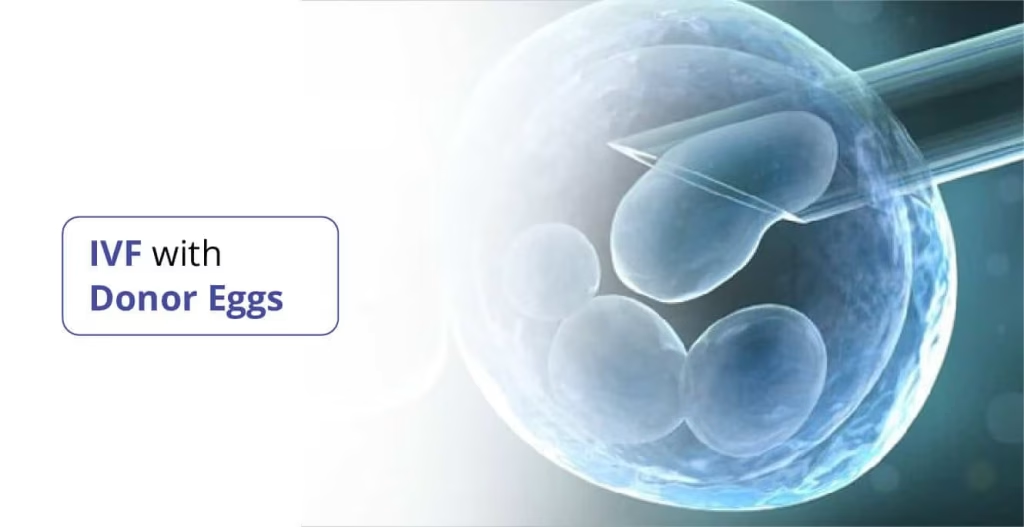
Donor egg IVF involves using eggs from a healthy, screened donor rather than the intended mother’s eggs. The donor undergoes ovarian stimulation and egg retrieval, while the intended mother (or gestational carrier) undergoes uterine preparation to receive the resulting embryo. The sperm can come from the intended father or a donor.
This treatment is particularly relevant for:
· Women over 40 with diminished ovarian reserve
· Premature ovarian failure
· Repeated IVF failure with own eggs
· Genetic disorders that could be passed to offspring
· Women with surgically removed ovaries
The Donor Egg Process in Nigeria: Step by Step
1. Decision and Counseling
The journey begins with thorough counseling. “We spend significant time ensuring couples understand all implications—medical, emotional, and legal,” says Dr. Funmi Akinola of Nordica Fertility Centre. “This is especially important in our cultural context where lineage is highly valued.”
2. Donor Selection
Nigerian clinics typically offer two pathways:
· Clinic-Recruited Donors: Anonymous, screened donors from the clinic’s database
· Known Donors: A sister, cousin, or friend (though this comes with complex emotional considerations)
3. Synchronization of Cycles
The donor’s cycle is synchronized with the recipient’s using hormone medications. The donor undergoes stimulation and retrieval, while the recipient prepares her uterine lining.
4. Fertilization and Transfer
The donor eggs are fertilized with sperm (partner’s or donor’s), cultured into embryos, and typically one or two are transferred to the recipient’s uterus.
Success Rates of Donor Egg IVF in Nigeria
Donor egg IVF boasts the highest success rates of all fertility treatments because the eggs come from young, healthy, proven donors.
Current Statistics from Leading Clinics:
· Under 35 donors: 60-75% success rate per transfer
· Cumulative success rate (with multiple embryos): Up to 90%+
· Significantly higher than conventional IVF, especially for women over 40
“The age of the egg determines success more than the age of the uterus,” explains Prof. Oladapo Ashiru of Medical Art Centre. “A 45-year-old woman using eggs from a 25-year-old donor has pregnancy rates similar to a 25-year-old woman using her own eggs.”
Cost of Donor Egg IVF in Nigeria (2026 Breakdown)
Donor egg IVF represents a significant investment. Here’s a detailed cost breakdown:
Component Estimated Cost Range (NGN)
Donor Compensation & Screening ₦800,000 – ₦1,500,000
Recipient Medication & Monitoring ₦300,000 – ₦600,000
IVF Laboratory Procedures ₦1,200,000 – ₦2,000,000
Embryo Transfer & Follow-up ₦400,000 – ₦700,000
Optional ICSI/PGT Testing ₦300,000 – ₦800,000
TOTAL ESTIMATED COST ₦3,000,000 – ₦5,600,000
Important Considerations:
· Costs vary based on clinic reputation and location (Lagos/Abuja typically higher)
· Some clinics offer package deals or shared donor programs to reduce costs
· Additional cycles or frozen embryo transfers cost extra
Top Clinics for Donor Egg IVF in Nigeria
When selecting a clinic for donor egg IVF, consider their experience, success rates, donor recruitment processes, and counseling support.
1. Nordica Fertility Centre (Lagos, Abuja, Asaba)
Why they stand out: Pioneer in Nigerian fertility treatment with a comprehensive donor program. They maintain one of the largest anonymous donor databases in West Africa and offer extensive psychological support.
2. The Bridge Clinic (Lagos, Port Harcourt, Abuja)
Why they stand out: UK-affiliated clinic with stringent donor screening protocols. Known for high success rates and transparent reporting.
3. Medical Art Centre (MART) (Lagos, Abuja)
Why they stand out: Led by renowned fertility specialist Prof. Oladapo Ashiru. Offers holistic approaches combining advanced reproductive technology with complementary therapies.
4. Genesis Fertility & Women’s Clinic (Lagos)
Why they stand out: Specializes in complex cases including donor egg IVF for women with premature ovarian failure. Strong focus on individualized treatment plans.
5. Nisa Premier Hospital (Abuja, Jabi)
Why they stand out: Well-established program with excellent facilities. Known for thorough donor matching processes.
Critical Questions to Ask Potential Clinics
1. What are your specific success rates for donor egg IVF in my age group?
2. How do you recruit and screen donors? What genetic/health testing is performed?
3. Is the donor anonymous, and what information can we receive about her?
4. What legal agreements are in place to protect all parties?
5. Do you offer psychological counseling throughout the process?
6. What is included in your quoted price, and what are potential additional costs?
7. What happens if the first cycle is unsuccessful?
Navigating Cultural and Emotional Considerations
In Nigeria’s family-centered culture, donor egg IVF presents unique considerations:
Family Disclosure: “We counsel couples on whether and how to disclose to extended family,” shares Dr. Ibrahim Wada of Nisa Premier Hospital. “Some choose to keep it private, while others find selective sharing reduces pressure.”
Spiritual Reconciliation: Many clinics work with religious counselors to help couples reconcile treatment with their faith. “We’ve developed relationships with enlightened religious leaders who understand modern fertility medicine,” notes Dr. Akinola.
Identity and Bonding: Concerns about bonding with a genetically unrelated child are common but largely unfounded. “The pregnancy and birthing process creates profound maternal bonds,” assures a counselor at Genesis Fertility.
Legal and Ethical Framework in Nigeria
Nigeria currently lacks specific legislation governing donor egg IVF, but reputable clinics follow international guidelines:
· Donors undergo comprehensive medical and psychological screening
· Legal contracts outline rights and responsibilities
· Donors typically renounce parental rights
· Confidentiality is maintained for all parties
· Clinics maintain detailed records while protecting identities
Is Donor Egg IVF Right for You?
Consider donor egg IVF if:
· You’re over 40 and have had failed IVF cycles
· You’ve been diagnosed with diminished ovarian reserve
· You have premature ovarian failure
· You carry genetic conditions you don’t want to pass on
· You’ve experienced early menopause
“Choosing donor eggs isn’t about giving up,” emphasizes Dr. Richardson Ajayi of The Bridge Clinic. “It’s about making a courageous decision to build your family through a different, but equally valid, path.”
Alternative Options and Next Steps
Before proceeding with donor egg IVF:
1. Get a second opinion to confirm it’s your best option
2. Consider embryo adoption (less expensive, but both genetic donors are different)
3. Explore surrogacy if uterine issues are also present
4. Join support groups to connect with others who’ve walked this path
Conclusion: A Path Forward to Parenthood
Donor egg IVF in Nigeria has evolved from a niche treatment to a reliable solution for many facing age-related or ovarian infertility. While the financial, emotional, and cultural considerations are significant, the high success rates make it a compelling option for those who have exhausted other paths.
The key is partnering with an experienced, ethical clinic that provides comprehensive support alongside medical treatment. With proper counseling and realistic expectations, donor egg IVF can help you achieve the dream of parenthood.